Coastal Birds of the Texas Gulf Coast
Where marsh meets sky
Photos © Charlaine Adams
Stand at the edge of any Texas Gulf Coast bay at dusk and you will almost certainly see one — a great blue heron, motionless as driftwood, watching the shallows with the patience of something that has been doing this for a very long time.
The Texas coast is one of the most important bird habitats in North America. The shallow bays, tidal flats, and coastal marshes between Galveston and the Rio Grande provide year-round feeding grounds and critical stopover habitat for hundreds of species. But it is the wading birds — the herons, egrets, spoonbills, and ibis — that most define the look and feel of this coastline.
The Great Blue Heron
The great blue heron (Ardea herodias) is the largest heron in North America, standing nearly four feet tall with a wingspan that can reach six feet. On the Texas coast, they are year-round residents — as much a part of the landscape as the live oaks and the shrimp boats.
They hunt alone, wading slowly through the shallows or standing completely still, waiting for a fish, frog, or crab to come within striking range. When they strike, it happens faster than the eye can follow — a javelin throw of neck and bill that rarely misses.
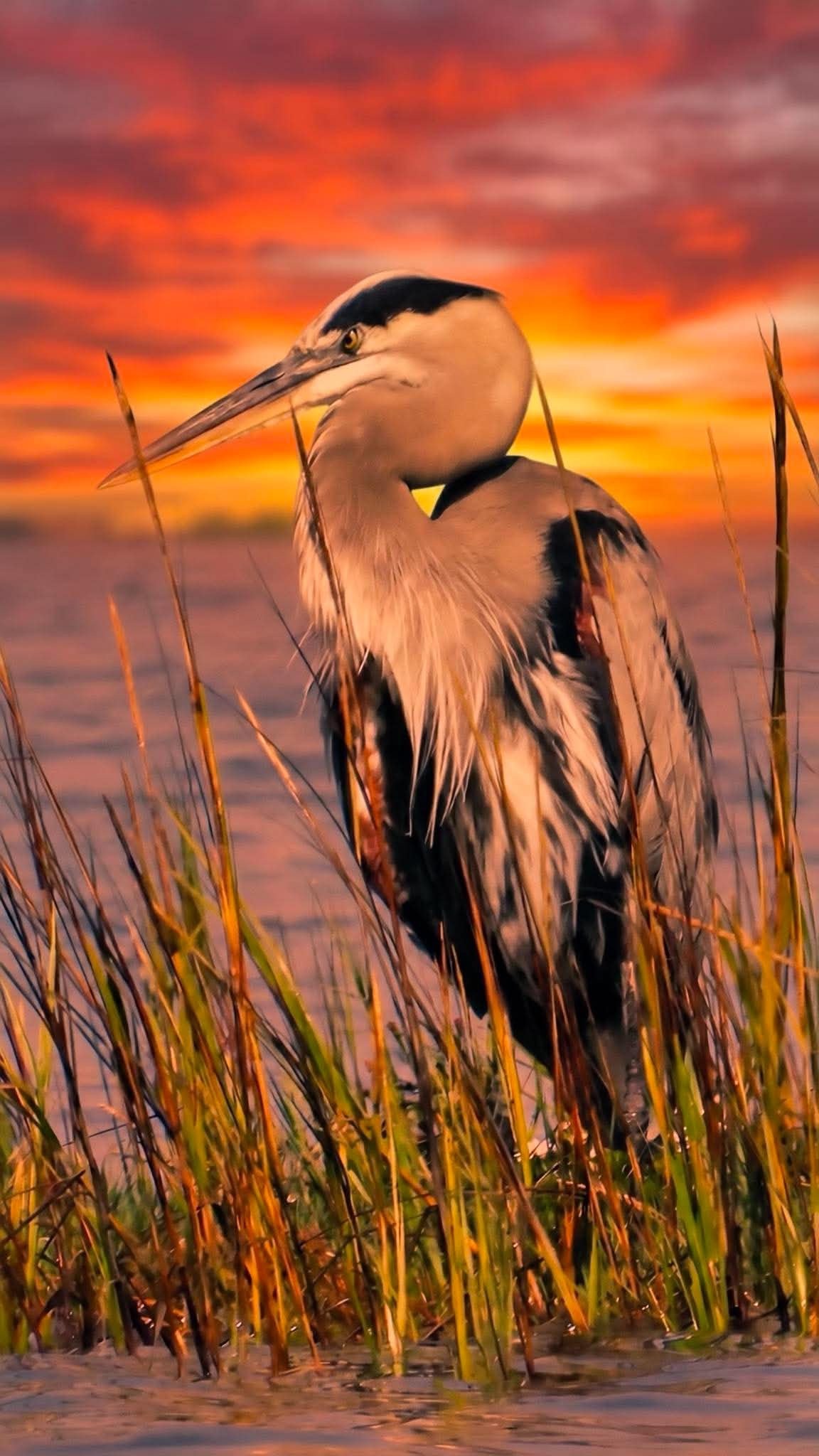
At sunset, the great blue takes on a different quality. The slate-blue plumage catches the last light in a way that makes the bird look almost painted. Charlaine Adams captured exactly that moment — a heron in the marsh grass as the sky went gold behind it. It is worth noting that in Spanish, the word for heron is garza — a name that has deep roots along this coast, carried by families whose history here runs as long as the birds themselves.
Stand at the edge of any Texas bay at dusk and you will almost certainly see one — motionless as driftwood, watching the shallows with the patience of something ancient.
The Snowy Egret
Where the great blue heron is solitary and still, the snowy egret (Egretta thula) is active and social. Smaller and entirely white, with bright yellow feet that flash as it stirs the water to flush prey, the snowy egret is one of the most recognizable birds on the Texas coast.
They were nearly hunted to extinction in the late 1800s, when their delicate breeding plumes — called aigrettes — were in high demand for ladies' hats. The campaign to protect them helped launch the modern conservation movement and led directly to the founding of the Audubon Society.
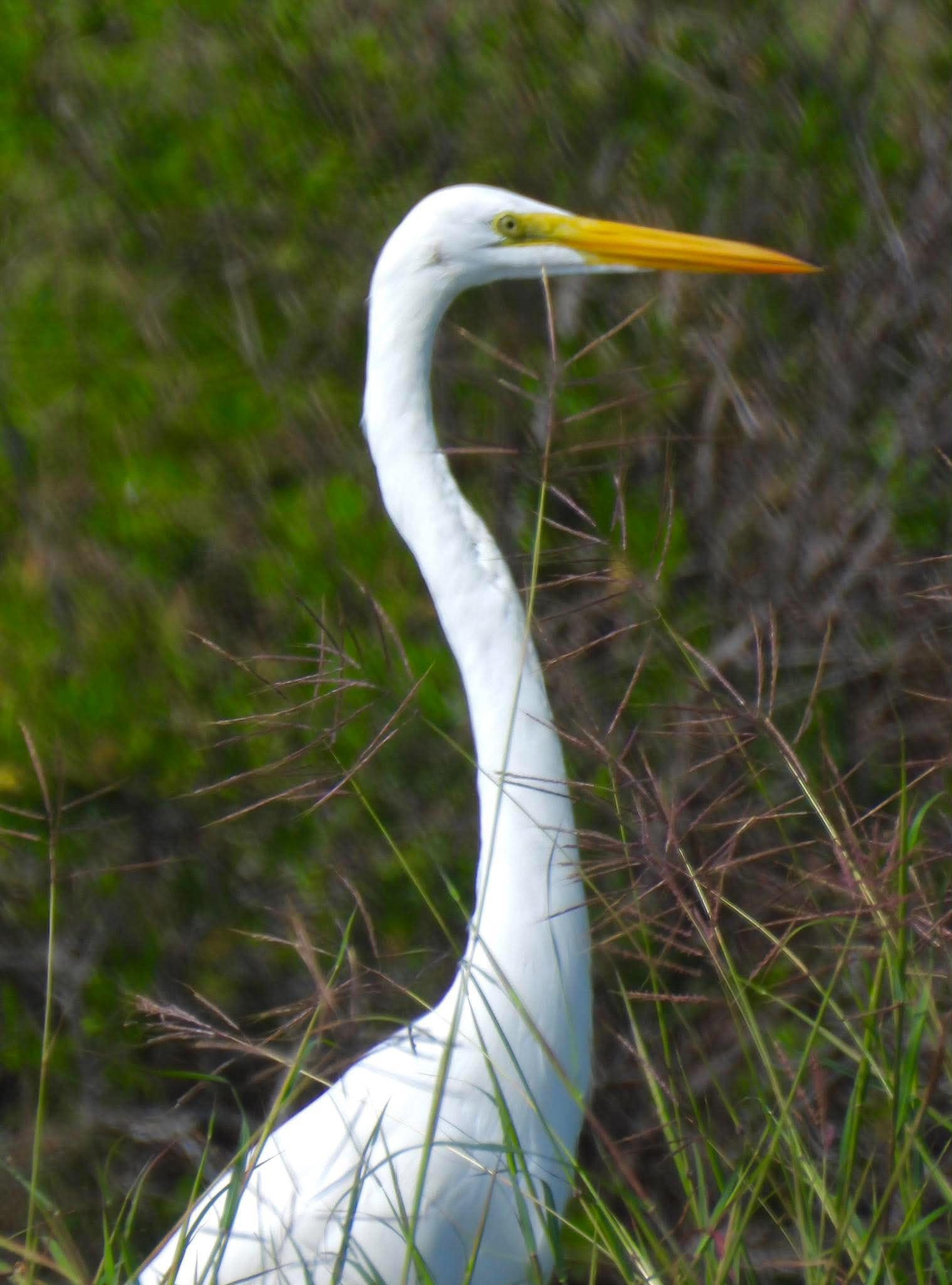
Today they are abundant again, nesting in mixed colonies with other wading birds in the coastal marshes. Adams photographed one in the marsh grass — a study in white against green, the bird's stillness belying the quick intelligence behind those yellow eyes.
Where to Watch Wading Birds on the Texas Coast
- Aransas National Wildlife Refuge — Best known for whooping cranes, but also home to roseate spoonbills, great blue herons, and tricolored herons year-round.
- Matagorda Bay Nature Park — Tidal flats and marsh edges attract large concentrations of wading birds, especially at low tide.
- Indianola area shoreline — The shallow flats along the old Indianola townsite are reliable spots for herons and egrets at dawn and dusk.
- Powderhorn Ranch (GLO) — One of the largest intact coastal prairie and wetland complexes on the Texas coast — exceptional birding year-round.
Charlaine Adams has been photographing coastal wildlife along the Texas Gulf Coast for years. Her work captures the quiet moments — a heron at last light, an egret in the marsh — that most people drive past without stopping.
If you have photos of coastal birds or wildlife you would like to share with Texas Gulf Coast Magazine, use the submission form below. We may feature your work in an upcoming issue.
All photos in this article © Charlaine Adams. Used with permission.
Share Your Coastal Photos
Got a great shot of a heron, spoonbill, or any coastal wildlife? We want to see it — and we may feature it in an upcoming issue.