Every November, the bays wake back up. The water cools, the reefs come alive, and somewhere out there, someone's grandfather is already at the water's edge.
Oyster season on the Texas Gulf Coast opened November 2nd — and if you grew up on these bays, you already know what that means. It means rubber boots and a cooler. It means the smell of salt water and shell. It means coming home with something the bay grew all on its own.
My grandfather — we called him Wello — didn't need a boat. The reefs were right there, visible from shore, close enough to wade out to when the tide was right. He'd work them the way you work anything that requires patience: quietly, without rushing, taking what was ready and leaving the rest.
When he came home, the shucking happened right there — on the porch, wherever there was a flat surface and good light. He'd wedge the knife in at the hinge, give it a twist, and pop the shell open in one clean motion. No sauce. No crackers. Just the oyster, cold and briny, straight off the half shell. We ate them so fast it's a wonder any made it inside at all.
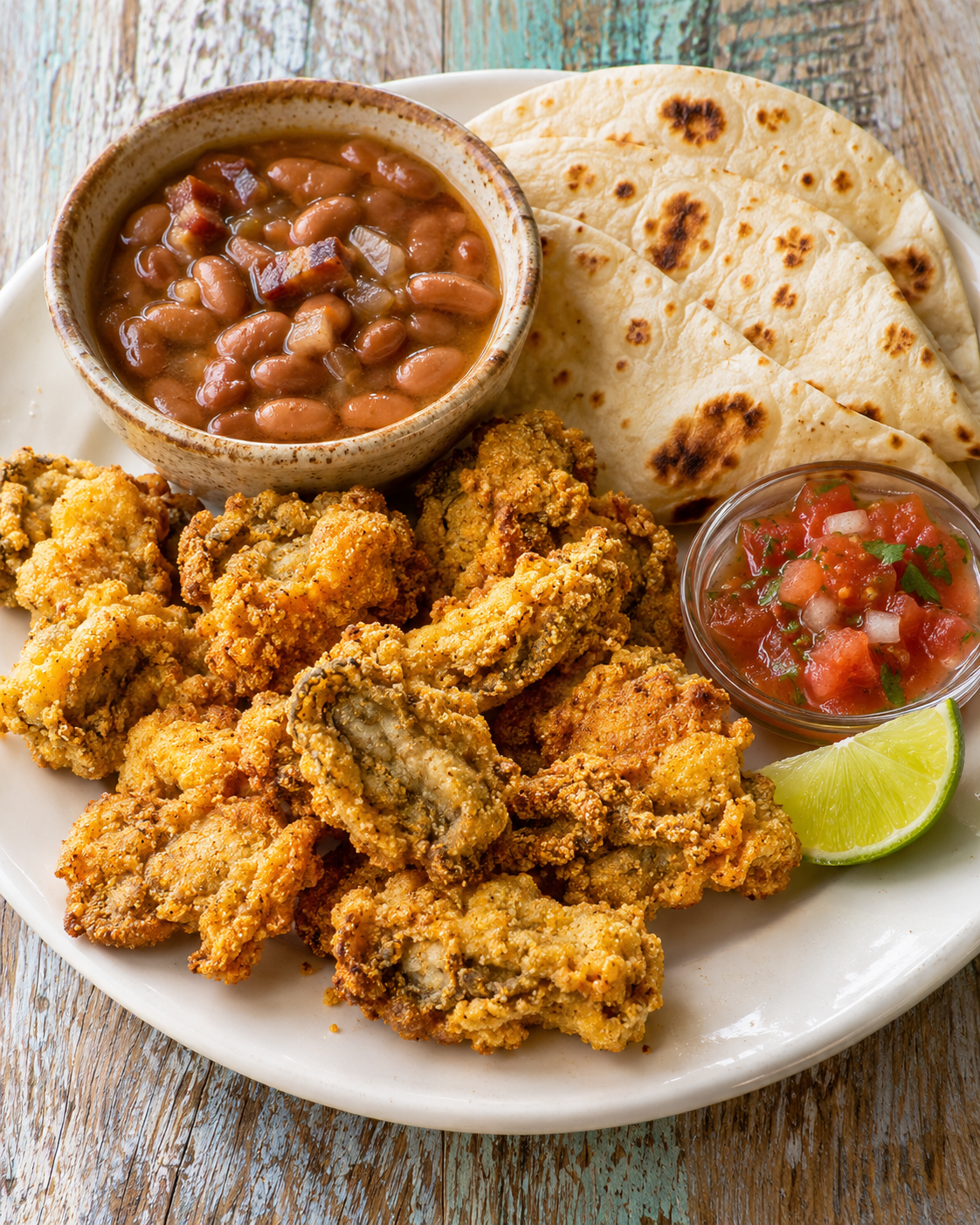
But Wella — my grandmother — had a plan for the ones that did. She'd fry them up golden and set them out alongside fresh beans and a stack of warm tortillas. That was the feast. No restaurant, no reservation, no menu. Just the bay, the family, and a table that felt like it had everything in the world on it.
"You take what you need, and you leave the rest."
There's something about eating an oyster that way — still tasting like the water it came from — that no restaurant can quite replicate. The bay is in every bite. Each reef along this coast has its own character, shaped by the mix of salt and fresh water, the tides that move through it, and the seasons the oysters keep better than any calendar.
Texas Parks and Wildlife manages the oyster season carefully. Harvest is allowed Monday through Saturday, sunrise to 3:30 p.m., from November 2nd through April 30th — but only on reefs in approved areas currently open to harvest. The rules exist because the reefs need time — time to recover, time to grow, time to keep giving. You take what you need, and you leave the rest.
The Texas Gulf Coast has some of the most productive oyster reefs in the country. From Galveston Bay down through Aransas, San Antonio, and Lavaca — each bay has its own flavor profile, its own personality. Oyster people will argue about which one grows the best. It's a good argument to have.
If you've never harvested your own, this is the season to try. You'll need a Texas fishing license with a saltwater endorsement, and you'll want to check TPWD's current reef status before you go — approved areas can change. Keep only oysters at least 3 inches long, and return anything undersized along with culled shell back to the reef. The bay will do the rest.
Wello and Wella are gone now, but the bays are still there. The reefs are still there. And every November when the season opens, I think about the tailgate, the knife, the frying pan, the beans, the tortillas — and the way a meal tastes when the whole family had a hand in making it.
Texas Gulf Coast Magazine celebrates the people, places, and traditions of the Texas coast. If oysters are part of your family story, we'd love to hear it — send us your photos and memories.