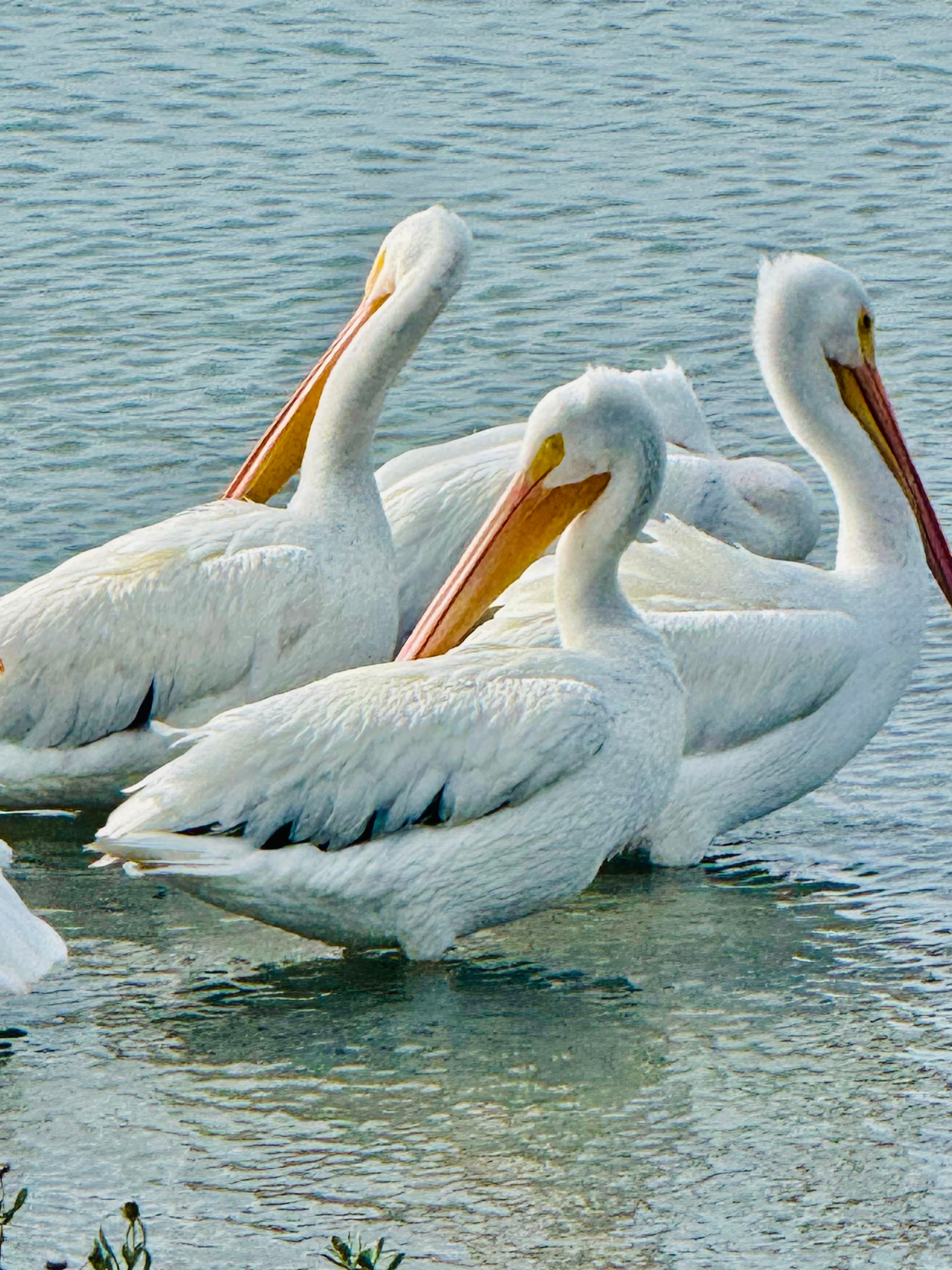
Some places watch the leaves change. Here on the Texas Gulf Coast, we watch the water.
The white pelicans have returned, and if you know where to look, you can find them all along our coastline — from the shallow flats of Lavaca Bay to the birding waters near Rockport, from the Leonabelle Turnbull Birding Center in Port Aransas to the quiet coves in between. Their arrival is one of the Gulf Coast's most recognizable signs of the changing season.
But behind those bright white gatherings is a journey that begins far beyond our bays — in the lakes and wetlands of Canada and the northern United States.
Where Are They Coming From?
American white pelicans breed in colonies, often on isolated islands in inland lakes. Their northern breeding grounds include the Canadian prairies and the northern Great Plains, with important colonies in North Dakota, South Dakota, Montana and Minnesota. Birds from central Canada and the north-central United States migrate primarily toward the Gulf Coast for winter.
That means the seasonal visitors gathering along our coastline may have spent their summer raising young beside a northern prairie lake.
Tracking research has documented northern Plains pelicans wintering in Texas and other Gulf states, as well as Mexico. Researchers also found that individual birds typically returned to the same general wintering areas year after year. For some of these travelers, the Texas Gulf Coast is a familiar destination.
The Journey South
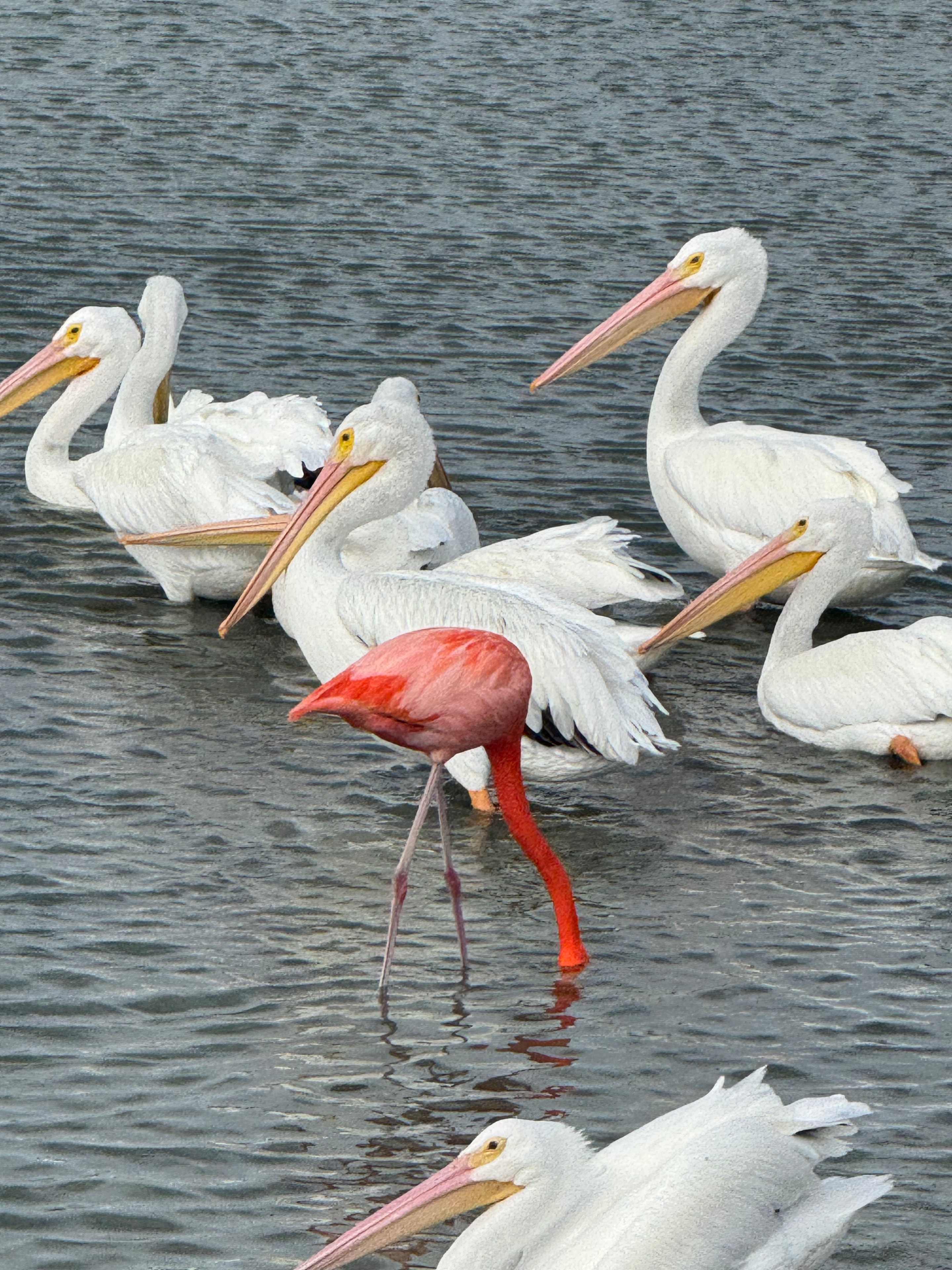
Their migration unfolds in stages. Flocks stop at lakes, rivers and wetlands to feed and rest along the way. The U.S. Fish and Wildlife Service describes white pelicans passing through Illinois River refuges in September as they head toward wintering grounds along the Gulf Coast and into Mexico.
They migrate during daylight, traveling in flocks and using rising columns of warm air — called thermals — to gain altitude. From there, they glide onward, sometimes forming long lines or V-shaped formations across the sky.
Their arrival here is one visible chapter in a much larger seasonal movement.
“They don't belong to any one town. They belong to the whole coast.”
— Christine Peña
Why Spend Winter Here?
The Texas coast offers exactly what white pelicans seek during winter: shallow bays, sheltered estuaries, feeding waters and exposed sandbars where they can rest. Our coastline — from the Aransas Bay system around Rockport and Port Aransas to the protected waters of Lavaca Bay — provides some of the best wintering habitat on the Gulf.
According to the Cornell Lab of Ornithology, wintering white pelicans favor coastal bays, inlets and similar sheltered waters where they can forage in the shallows. The Leonabelle Turnbull Birding Center in Port Aransas is one of the most reliable spots on the entire Texas coast to find them — a freshwater pond surrounded by marsh that draws pelicans, roseate spoonbills and dozens of other species through the winter months.
Although migrating flocks make their presence more noticeable during the cooler months, some white pelicans remain along the Texas coast year-round. Their seasonal return adds to a population that is never entirely absent from our shoreline.
Watch the Way They Fish
White pelicans offer more than a beautiful photograph. Stay awhile, and their feeding behavior becomes part of the show.
Unlike brown pelicans — the year-round residents you see perched on every pier from Rockport to Port Lavaca — white pelicans feed while swimming. They dip their large bills beneath the surface, scoop up prey and drain the water before swallowing.
Sometimes they work together, gathering into groups and driving fish toward shallower water, where a coordinated round of dipping bills makes the catch easier.
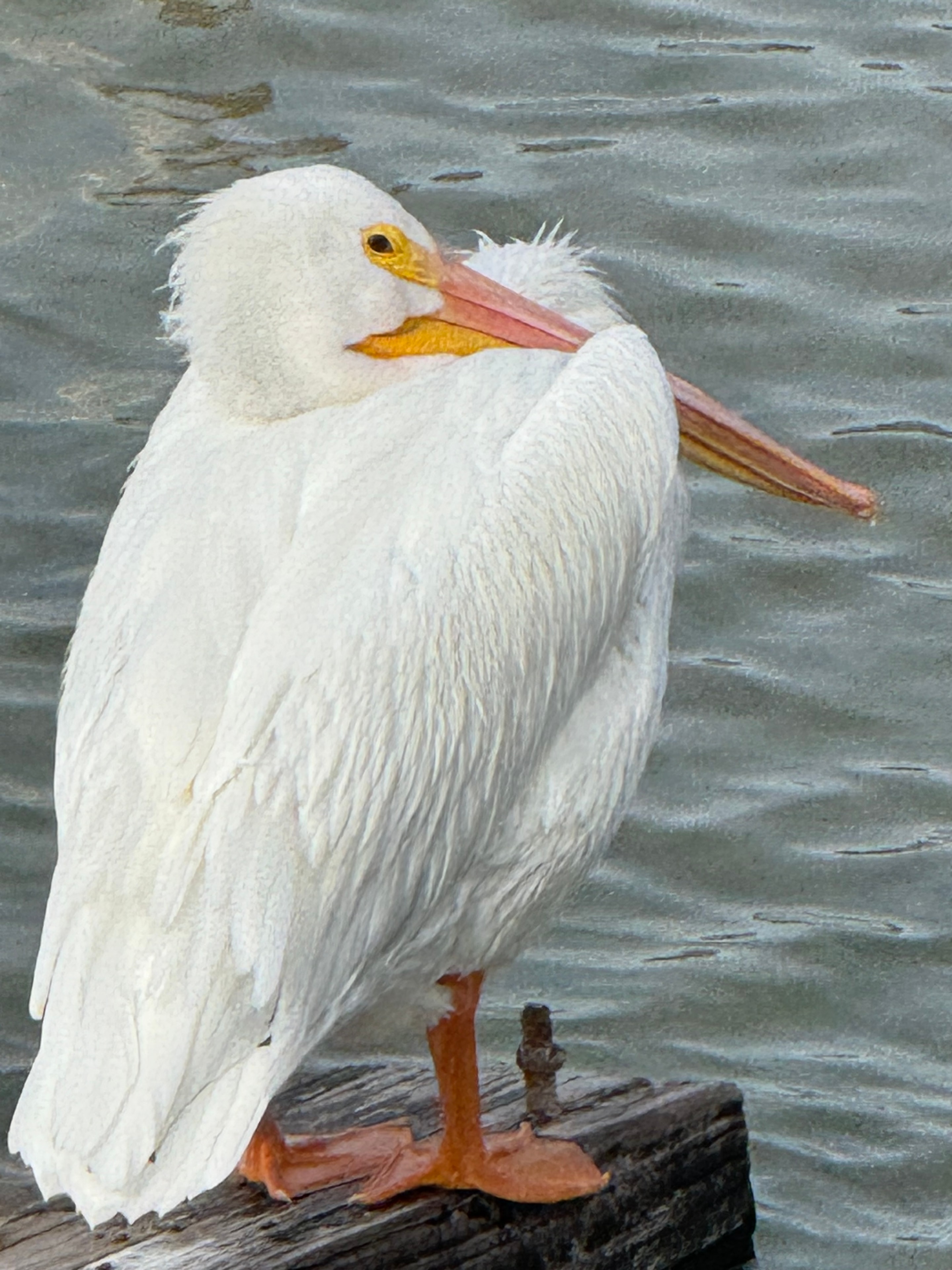
Then there is the moment they take flight. Among North America's largest birds, American white pelicans have wingspans that can exceed nine feet. When those wings unfold, the black flight feathers create a striking contrast against their white plumage. A resting flock becomes an entirely different spectacle once it rises above the bay.
Where to Find Them Along the Coast
You don't have to travel far. White pelicans have been spotted this season from Lavaca Bay near Port Lavaca all the way down to the Rockport waterfront and the birding ponds at Port Aransas. The Leonabelle Turnbull Birding Center — tucked just off the main road in Port Aransas — is worth the stop on its own.
Keep an eye on the shallow flats and open bays. Early morning and late afternoon are the best times to catch them feeding. Bring binoculars if you have them, but honestly, when a flock of white pelicans lifts off a bay, you won't need them.
They don't belong to any one town. They belong to the whole coast.